

Polar Bears in Art: Symbolism and Style
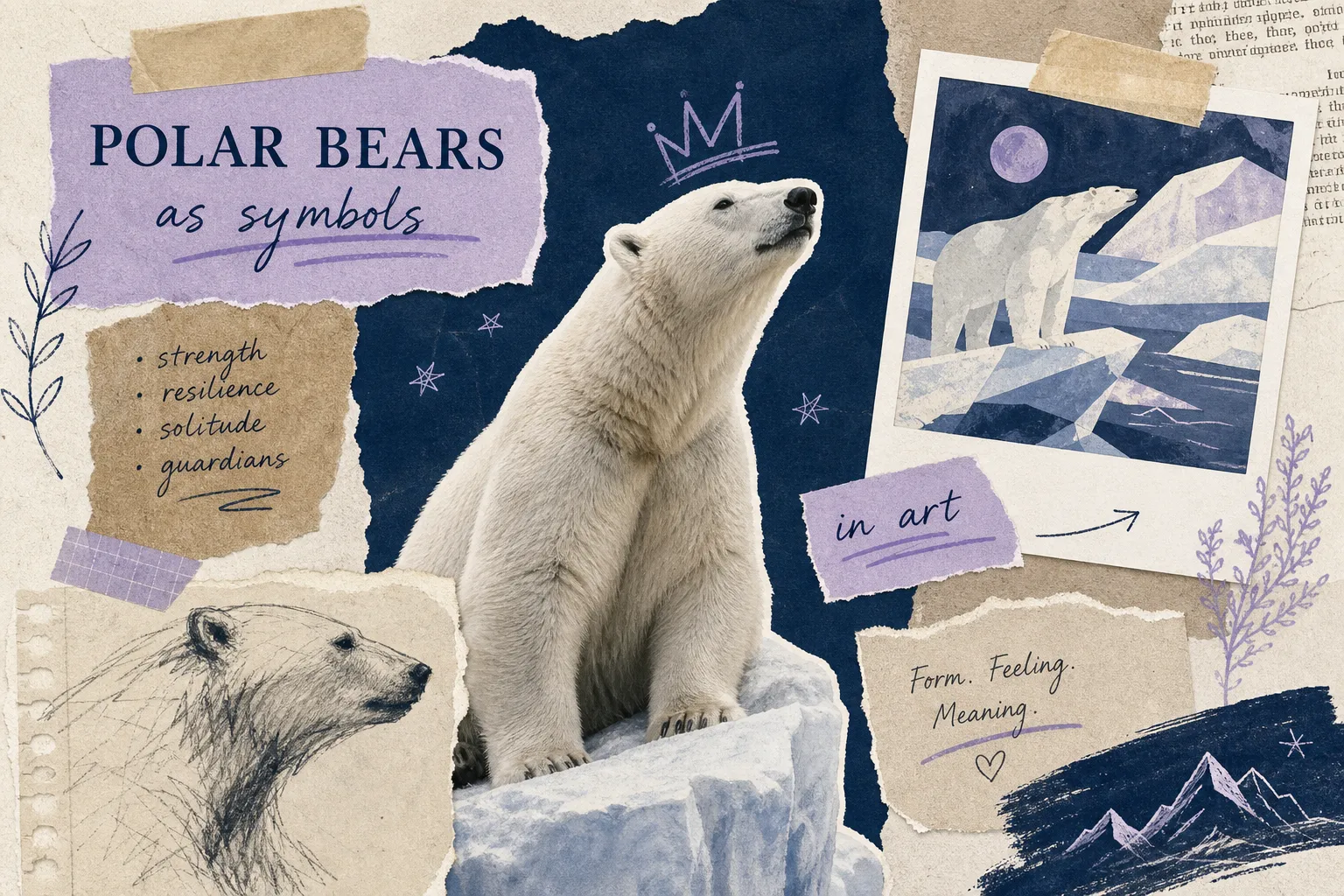
There's a moment that happens in front of certain paintings. You walk past, you glance, and then you stop. Something holds you there. I had that experience the first time I painted polar bears, brush hovering over a wash of cold white, feeling the weight of what I was trying to capture. Not just an animal. A presence. A feeling that the canvas was asking more of me than usual.
Polar bears do that. They carry meaning the way few other creatures do, and artists have always known it. This article is about why. We'll look at what this animal has meant across cultures, why contemporary artists keep returning to it as a subject, and how that symbolism has found a home in wearable art. At Bear Heart Art, my Seattle-based studio and shop, the polar bear is one of the motifs I come back to again and again, in original paintings and on organic hoodies and totes. That didn't happen by accident. It happened because this animal refuses to be a background image.
What polar bears have always meant in art and myth
The polar bear, known scientifically as Ursus maritimus, the sea bear, has never been neutral in human culture. Long before Western explorers encountered this animal on Arctic expeditions, Inuit and other Arctic indigenous peoples had built an entire symbolic world around it.
Polar bears as spiritual figures in indigenous traditions
In Inuit culture, the polar bear is called nanuq, and it occupies a place at the very top of the animal hierarchy. The Inuit considered it "almost man", a being so intelligent, so capable, that it bridged the boundary between the human world and the spirit world. Shamans worked with polar bear amulets as a primary source of power, and artists rendered this animal with reverence, not decoration.
The motif of the dancing polar bear in Inuit carving symbolizes rebirth, a whole cosmology compressed into a single figure. Hunters who killed a bear were expected to offer its spirit respect and tools, acknowledging that the bear had chosen to give itself. This was reciprocal, relational, spiritually serious art-making.
How Western art picked up that symbolism
When polar bears entered the Western imagination through 18th and 19th century Arctic exploration, the meaning shifted but didn't disappear. Edwin Landseer's 1864 painting Man Proposes, God Disposes showed polar bears feeding on the wreckage of an expedition, representing nature's absolute authority over human ambition. Frederic Church painted the Arctic as the dwelling place of the divine, where humans ventured at their own peril. The animal became shorthand for wildness, endurance, and the sublime, everything raw and untamed about a world that hadn't yet been conquered. Even as the imagery shifted toward Western ideas of triumph and exploration, the underlying message held: the polar bear means something. It's not just scenery.
Why this animal has become the symbol of our moment
In 2026, painting a polar bear is a different act than it was in 1864. According to the IUCN Polar Bear Specialist Group, Ursus maritimus is listed as Vulnerable, with a global population estimated at roughly 26,000 individuals across 19 subpopulations. The U.S. Fish and Wildlife Service first classified the species as Threatened under the Endangered Species Act in 2008, a status reaffirmed in subsequent reviews. The Southern Beaufort Sea subpopulation has declined sharply, dropping roughly 40% from early 2000s levels, according to FWS survey data. Sea ice, the platform polar bears depend on to hunt ringed and bearded seals, is shrinking. In areas like Western Hudson Bay, the ice-free season has extended significantly, forcing bears onto land where they cannot hunt effectively.
Polar bears and contemporary conservation art
Contemporary artists working with the polar bear as a subject understand all of this. British sculptor Mark Coreth created a life-size polar bear encased in ice for a WWF climate campaign; as the ice melted, a bronze skeleton emerged. Icelandic artist Bjargey Ólafsdóttir painted a massive polar bear outline on a glacier using organic dye to draw attention to a UN climate conference. These artists aren't illustrating data. They're doing something art does that spreadsheets can't: making you feel what the numbers are actually describing.
Art as a way of holding what data cannot
There is a real difference between reading that some subpopulations face serious pressure and seeing a polar bear painted against darkening, fragmenting ice. Statistics register in the brain. Paintings reach somewhere else entirely. That gap is why artists keep returning to this animal. A single image can hold the beauty of the Arctic world, the resilience of a species that has survived for thousands of years, and the particular grief of watching that resilience tested by forces it didn't cause.
How Bear Heart Art brings this symbol into everyday life
I started Bear Heart Art because I believe art shouldn't live only on gallery walls. When you paint something that carries genuine meaning, you want it to travel. The polar bear, with all its symbolic weight and urgency, belongs on things people carry with them every day.
Original paintings translated into wearable and everyday pieces
The designs on Bear Heart Art's organic hoodies and tote bags come from my actual paintings, not stock illustrations or generic wildlife graphics. When a polar bear motif appears on one of these pieces, it carries the specific intention of the original work: the brushwork, the emotional register, the knowing. That distinction matters more than it might seem. Much of what fills the mass market uses wildlife imagery as aesthetic decoration, disconnected from any real understanding of the species. This is something different. (See our Clothing, Bear Heart Art.)
Why organic materials are part of the message
Putting a polar bear on a hoodie made from organic cotton is a small act of coherence. The medium reflects the meaning. A symbol of Arctic vulnerability printed on materials that respect the earth carries a different weight than the same image on something made without those considerations. Many shoppers who care about both art and the environment mention that sense of alignment when they describe why these pieces resonate, the values stack up consistently, from the art to the fabric to the production choices.
Choosing art that says something beyond the surface
Not all wildlife prints carry meaning. The ones that do come from artists who feel the weight of their subjects, who understand what the animal represents and why honest representation matters. When you choose a piece of wearable art thoughtfully, a Bear Heart Art tote, a hoodie carrying original work, you're making a quiet statement about what you value.
Every purchase from an independent artist instead of a mass retailer keeps a certain kind of art alive: work with a point of view, work that remembers what the Arctic bear actually means, work that refuses to reduce a complex, threatened, spiritually significant animal into a decorative pattern. Organizations like Polar Bears International and the WWF work on the policy and habitat side of conservation. Artists and the people who support them work on the cultural side, keeping the emotional truth of these creatures in front of human eyes.
Why some symbols deserve to travel with us
Art has always been how humans hold on to what they can't bear to lose and refuse to stop celebrating. From Inuit shamans carving bone amulets to contemporary painters working in oil and acrylic with full knowledge of climate data, the polar bear has served as that kind of symbol: awe and urgency in the same image, beauty and accountability inseparable from each other.
When Bear Heart Art puts that work on an organic hoodie or a tote bag, the symbol doesn't shrink. It finds somewhere to live in the world beyond the canvas. It comes with you to the farmers market, to the coffee shop, to wherever you carry things you care about. That feels right for an animal that has meant something to humans for thousands of years and needs to keep meaning something now. (You can also wear this idea on a tee: Polar Bear Crescent Moon, Women's organic t-shirt.)
If you've ever felt that pull toward a piece of art that held more than it showed, polar bears have a way of doing exactly that, and so does the work at Bear Heart Art. The shop is at bearheart.art, where new pieces are added as they're completed. If you'd like to commission work or ask a question, please visit our Contact, Bear Heart Art page. Some symbols deserve to travel with us.